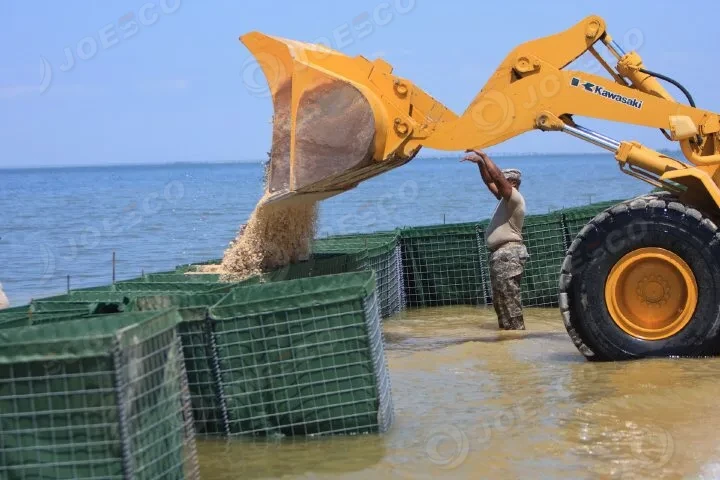
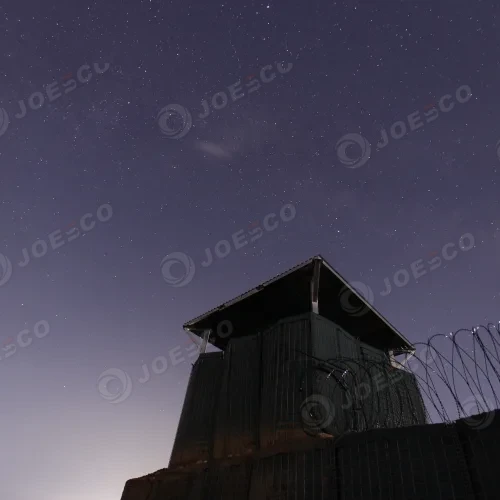
joesco bastion systems—welded wire mesh units lined with heavy-duty geotextile and filled on-site with soil or sand—have become standard in flood mitigation, temporary military defense, and slope stabilization. Yet, when procurement teams ask, “What is the price of a hesco bag?” the answer is rarely straightforward. Pricing is dynamic, shaped by specification tiers, supply chain variables, and deployment scale.
Baseline Price Ranges (2024–2025 Market Estimates)
Unit Type | Approx. Unit Price (USD) | Typical Use Case |
|---|---|---|
Standard 3×3×3 ft (0.9m) | $25–$45 | Residential flood barriers, landscaping |
Medium 6×3×3 ft (1.8m) | $45–$85 | Roadside erosion control, event security |
Heavy-Duty 10×3×3 ft / MIL-SPEC | $90–$160+ | Military FOBs, critical infrastructure |
Note: Prices reflect FOB factory or regional distributor rates. Bulk orders (50+ units) typically reduce per-unit costs by 15–30%.
5 Core Variables That Drive Final Cost
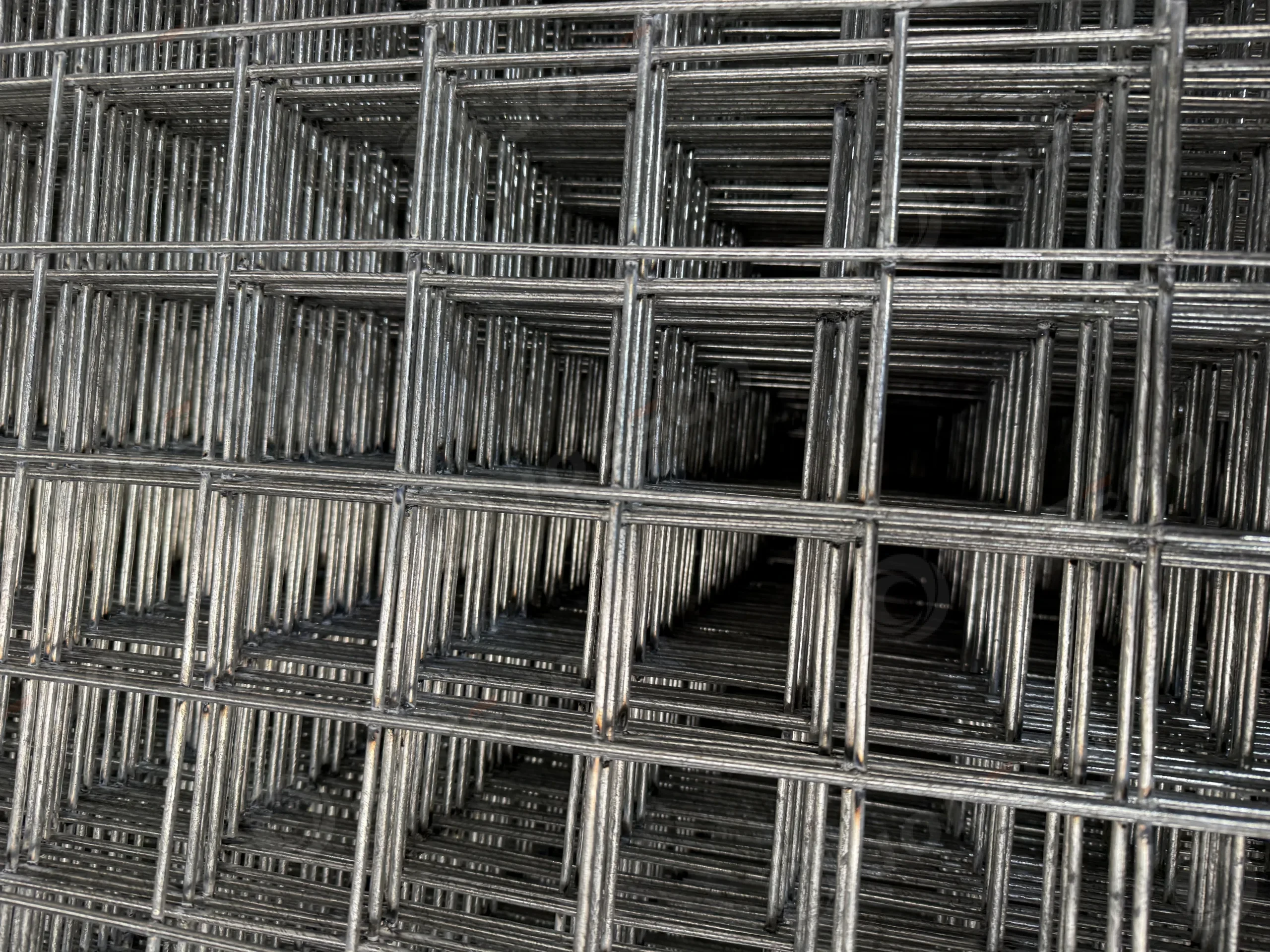
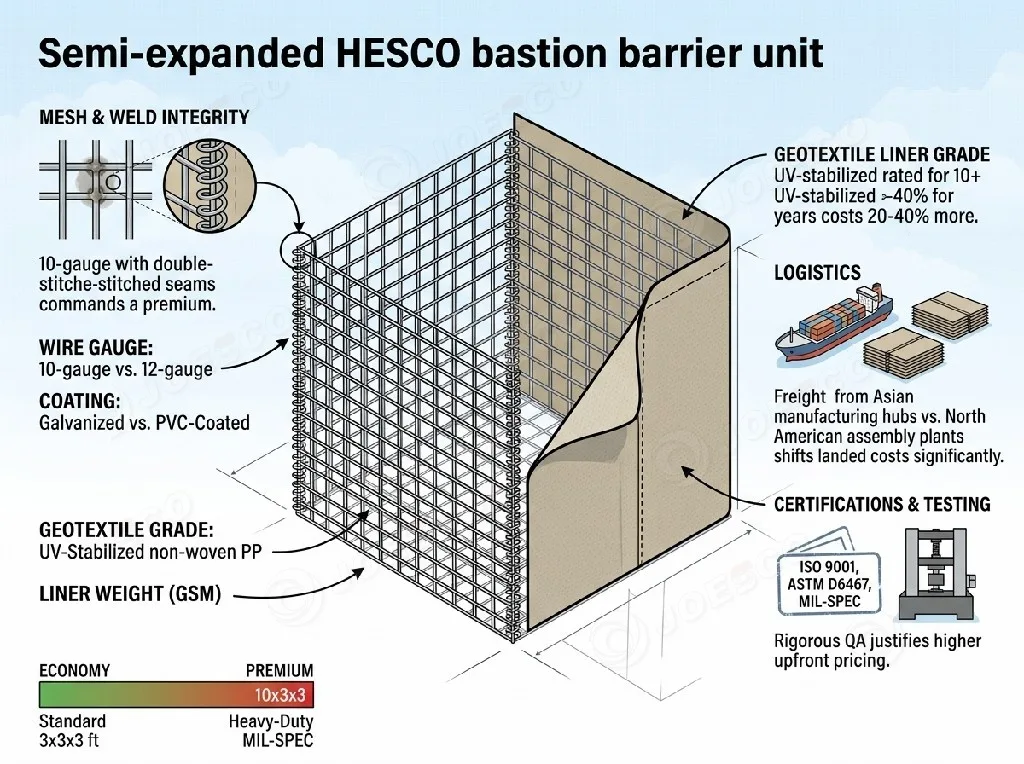
- Mesh Gauge & Weld Integrity: 10-gauge galvanized steel with double-stitched seams commands a premium over 12-gauge economy lines. Corrosion resistance (e.g., PVC-coated vs. bare galvanized) directly impacts lifecycle cost.
- Geotextile Liner Grade: UV-stabilized, non-woven polypropylene liners rated for 10+ years outdoors cost 20–40% more than standard agricultural-grade fabrics.
- Order Volume & Packaging: Flat-packed units ship efficiently but require on-site assembly labor. Pre-expanded or palletized configurations add handling costs but reduce field deployment time.
- Logistics & Regional Sourcing: Freight from Asian manufacturing hubs vs. North American/European assembly plants shifts landed costs significantly. Port congestion, fuel surcharges, and customs duties must be factored into TCO (Total Cost of Ownership).
- Certifications & Testing: Units compliant with ISO 9001, ASTM D6467 (geotextile tensile strength), or military Mil-Spec standards undergo rigorous QA, justifying higher upfront pricing through reduced failure risk.
Procurement Best Practices
- Request Dimensional & Material Sheets: Avoid “generic HESCO-style” labels. Specify wire diameter, coating type, liner weight (gsm), and seam stitch count.
- Model Lifecycle, Not Just Purchase Price: A $30 unit that degrades in 2 seasons often costs more than an $80 unit rated for 8+ years of cyclic loading.
- Negotiate Tiered Pricing: Many manufacturers offer volume breaks at 20, 50, and 100-unit thresholds. Lock in rates with rolling purchase orders if project timelines extend.
- Verify Fill Material Compatibility: Local soil gradation affects structural performance. Poorly graded fill can cause bulging or liner rupture, voiding warranties.
Final Takeaway
HESCO bags are a deployment-speed solution, not a commodity. The most cost-effective procurement strategy aligns specification rigor with project risk tolerance. Request engineered datasheets, compare landed costs per linear foot of barrier, and prioritize suppliers who provide load-test documentation. In temporary infrastructure, reliability always outprices the lowest quote.