Welded wire mesh panels are the backbone of modern security fencing, machine guarding, warehouse partitions, and concrete reinforcement. Yet the specification language — gauge, aperture, selvedge, coating — confuses buyers and produces expensive mismatches. This guide decodes the terms, shows how each parameter affects price and performance, and gives you a specification template you can paste straight into your next RFQ.
How Welded Wire Mesh Panels Are Made
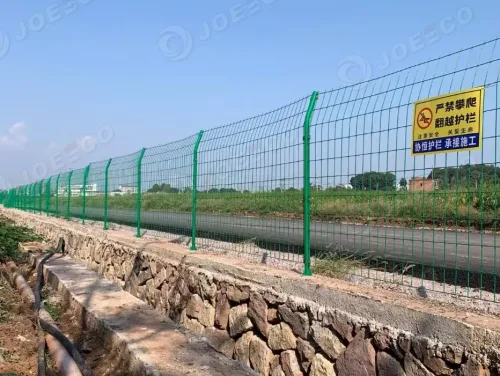
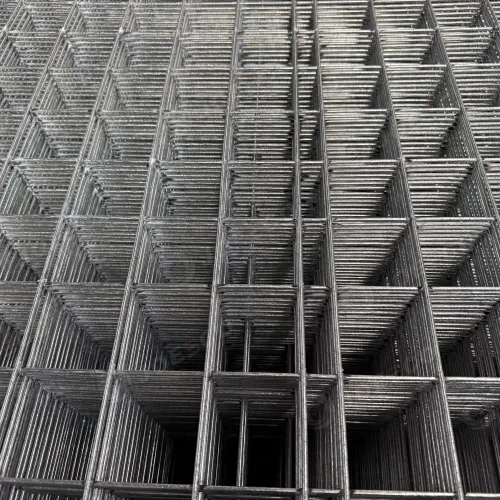
Panels are produced by resistance-welding horizontal and vertical wires at every intersection — no weaving, no hinges. The result is a rigid sheet with consistent square or rectangular apertures. Because every joint is welded, panels hold their shape under tension, which makes them ideal for security fencing systems where climbing resistance and panel rigidity matter.
The Three Parameters That Define a Panel
1. Wire gauge (diameter)
Common diameters run from 2.0 mm (light, interior use) to 6.0 mm (high-security fencing). Heavier wire increases tensile strength, rigidity, and price roughly in proportion to cross-section. For perimeter fencing, 4.0–5.0 mm is the industry workhorse; for anti-climb high-security lines, 5.0–6.0 mm is typical.
2. Aperture (mesh opening)
Aperture is the clear distance between wires, stated as width × height, e.g., 50 × 200 mm. Smaller apertures block fingers, tools, and small objects but add weight and cost. Common choices: 50×50 mm (general security), 50×200 mm (classic fencing), 100×100 mm (economy and agricultural).
3. Panel format
Standard panels run 2.0–3.0 m wide and 1.5–2.4 m high, with welded frame (for bolted installation) or plain edge (for clamping systems). Frame tube profiles vary — 40×40 mm is common; specify frame thickness for wind-load resistance.
Coating Systems: What Protects the Steel
| Coating | Typical Lifespan | Best For |
|---|---|---|
| Hot-dip galvanized (zinc) | 15–25 years | Industrial, coastal, budget-conscious |
| Galvanized + PVC | 25+ years | Residential, green fencing, aggressive climates |
| Powder coating | 10–15 years | Architectural and color-matched projects |
| Bare (no coating) | 5 years indoors | Concrete reinforcement only — never outdoor fencing |
Always ask for zinc coating weight in grams per square meter (250 g/m² minimum for fencing). A thin coating looks identical at delivery and fails years earlier. Our welded wire mesh panels are supplied with certified coating weights on request.
Specification Template for Your RFQ
PANEL: 2400 mm (L) x 1800 mm (H), frame 40x40x2.0 mm
MESH: aperture 50 x 200 mm, wire 5.0 mm
COATING: hot-dip galvanized, zinc >= 275 g/m2, optional PVC RAL 6005
ACCESSORIES: posts, clamps, brackets, gate kits
CERTIFICATION: mill certs + coating test reports per batch
Adjust the values to your site and threat level; the structure of the spec — geometry, wire, coating, accessories, certification — is what prevents disputes at delivery.
Choosing Between Welded and Chain Link
Welded panels win where rigidity, aesthetics, and anti-climb performance matter: airports, data centers, substations, and industrial yards. Chain link wins where cost per meter is king and contours require flexibility. Both are in our product line, and our engineers can cost both options for your perimeter. For tall or wind-loaded runs, pair panels with heavy fence posts and correct post spacing.
Cost Drivers and How to Control Them
Three factors drive the price of any welded mesh order: wire weight, coating type, and panel format. Wire weight is the biggest lever — going from 4.0 mm to 5.0 mm wire increases steel mass (and price) by roughly 56% at the same aperture. Before upgrading gauge, ask whether the requirement is anti-climb (then consider smaller aperture first) or load-bearing (then thicker wire is justified).
Coating adds a second cost tier: PVC-coated panels typically cost 15–25% more than galvanized-only, but extend service life in coastal and industrial atmospheres. A simple lifecycle calculation — replacement cost divided by years of service — usually favors the better coating for anything expected to last more than a decade. Frame format is the third lever: plain-edge panels for clamp systems cost less than framed panels, and standard sizes cost far less than custom dimensions.
Consolidate your order: buying panels, posts, and fittings from one manufacturer saves freight and simplifies warranty. For total perimeter cost, request a quote that includes fence posts, clamps, and gates together.
FAQ
What is the difference between welded wire mesh and chain link mesh?
Welded mesh is a rigid grid of resistance-welded wires; chain link is woven, flexible, and cheaper. Welded panels resist climbing and deformation better; chain link adapts to slopes. See our chain link mesh page for the alternative.
Can welded mesh panels be used for concrete reinforcement?
Yes — welded wire fabric (WWF) is standard in slabs and walls. Specify the correct wire diameter and aperture for structural loads; this is a different product grade from fencing panels.
How do I estimate the number of panels for a fence line?
Divide the fence length by the panel width, then add 2–3% for posts, gates, and waste. Send us your site drawing for an exact BOM.
Do you supply panels with custom colors?
Yes — PVC and powder coatings are available in standard RAL colors, including green, black, and anthracite for architectural projects.
Bottom line: spec wire gauge, aperture, coating weight, and panel format in writing; verify with batch certificates; and compare welded vs chain link before committing. Contact our team with your perimeter length and threat level for a full materials list and quote on welded wire mesh panels.